

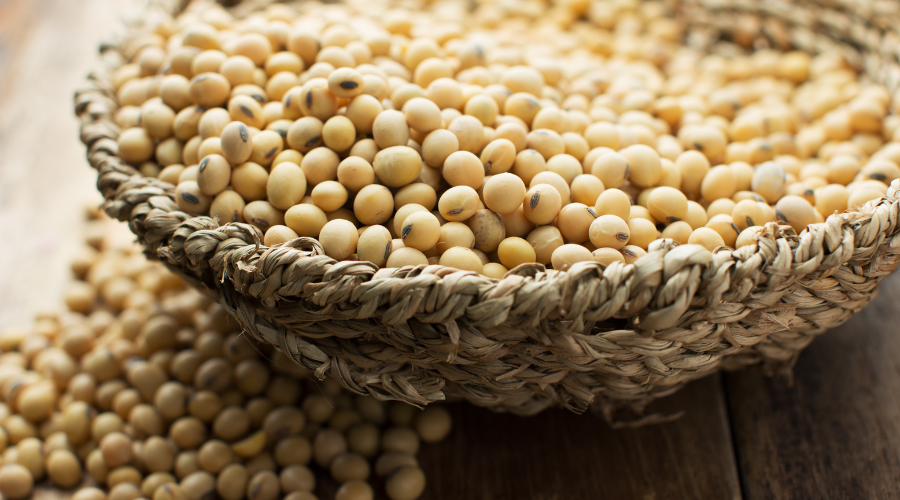
Soybeans are one of the most traded agricultural products in the world. They go into animal feed, cooking oil, tofu, soy milk, biodiesel, and dozens of other products. Billions of people depend on soybean exports daily. Yet, most of them don’t even realize just how interconnected the global soybean trade actually is.
Many exporting countries heavily influence the global soybean market. Brazil, the United States, and Argentina continue to dominate international soybean trade, while China remains the world’s largest importer. Changes in weather, tariffs, logistics, fuel demand, and geopolitical tensions can quickly impact soybean prices and global supply chains.
Today, we will cover the global soybean market, the flow of soybean exports by country, and the analysis of soybean trade worldwide.
The global soybean exports were reported to be worth $79.7 billion in 2024. That was a high drop of nearly 15% from 2023. This happened mostly because the commodity prices had softened during that year. Now, if you zoom out, you would see that the trend remains firmly upward.
In 2020, the total revenue from soybean exports was around $63.8 billion. This means that within five years, there has been a 25% growth, even with the 2024 pullback. In terms of volume, the global soybean trade is estimated to be around 187.6 million metric tons. This tells us that soybeans are among the most traded crops, crossing borders rigorously throughout the year.
Looking ahead, the market is expected to keep growing. The global soybean market, including domestic and international production, processing, and trading, was valued at around $160-$208 billion in 2025. This actually depended on how it was measured, and most forecasts expect it to exceed $300 billion by 2035. This is based on a compound annual rate of around 4% to 5%.
There are a few things that influence this growth. The rising global demand for protein has been driven by the excessive use of soybean oil in biodiesel. The growing middle class in Asia and Africa is also demanding more meat and dairy. When people eat more meat, farmers need more soy to feed their animals. This becomes the core demand loop that keeps powering this market for decades.
Here’s the most important fact about global soybean exports: Three countries- Brazil, the United States, and Argentina- have been dominating the worldwide export of soybeans, accounting for nearly 90%. This is quite an unusual level of concentration for any major commodity market.
Brazil is now the ultimate leader in the global soybean exports, and it isn’t particularly close. In 2024, Brazil exported $42.9 billion in soybeans, representing about 53.9% of the global export market. This is a huge feat for a single country to account for more than half of the global soybean trade.
Brazil exports more than 53 million metric tons of soybeans annually, even though 2025 has been an extraordinary outlier year. China purchases the majority of Brazilian soybean exports.
The recent trade dispute between China and the United States has paved the way for Brazil to step forward and take over the trade routes.
The soybean industry of this country also benefits from the competitive production costs and investments in port construction. Most buyers now prefer Brazilian soybeans because of their low prices and stable supply.
The United States remains one of the world's most powerful soybean exporters despite increasing competition from South America. There is a highly advanced farming system in America that supports its soybean production. There are also large-scale mechanized agriculture and strong transportation networks.
The whole country exports soybeans to major global markets, including China, Mexico, Japan, and the European Union. However, the US soybean industry has faced quite a lot of disruptions during the US-China trade conflict. There were many tariffs on American agricultural products, which reduced China's purchases of Soybeans from the United States and shifted more demand toward Brazil.
The United States has also increased its domestic soybean production capacity to support the renewable diesel and biodiesel industries. This has created new growth opportunities for American Soybean producers.
Argentina plays a unique role in the soybean industry. This country focuses heavily on processing soybeans rather than exporting only raws. It is one of the world’s largest exporters of soybean meal and soybean oil. These processed soybean products are quite essential for livestock feed manufacturing and food production worldwide.
The soybean sector of this country has faced production challenges during recent droughts. However, harvest conditions are improving significantly, which has supported the export recovery of this region. It remains one of the most important players in the global agricultural supply chain due to its strong processing infrastructure.
China dominates global soybean imports and strongly influences soybean prices worldwide. The country imports more than 100 million metric tons of soybeans annually, accounting for over half of global soybean imports.
Soybeans are critical to China’s livestock sector because soybean meal is widely used in poultry, pig, cattle, and aquaculture feed production. China also imports soybeans for cooking oil, food processing, and industrial applications.
Brazil has become China’s preferred soybean supplier due to competitive pricing and strong trade partnerships. The United States still exports large quantities of soybeans to China, but market-share competition remains strong between the two agricultural giants. Any change in the Chinese buying patterns can quickly affect global soybean pricing and trade flows.
There are several other countries that are steadily increasing their role in the soybean trade.
Paraguay continues to expand its production and supplies soybeans in large volumes to the neighboring countries for processing.
Canada is one of the top soybean exporting regions, trading high-quality crops to markets across Asia and Europe.
Uruguay has emerged as one of the fastest-growing agricultural exporters in recent years, exporting soybeans at high volume across borders.
Many countries, such as Ukraine, Romania, and Russia, are gradually developing their soybean industries amid rising global demand.
Although their export game is smaller than that of major regions like Brazil or the United States, they still contribute noticeably to the soybean market and to supply chain stability.
Multiple global factors influence the soybean prices. These mostly include suitable weather conditions, fuel markets, crop yields, freight costs, government policies, and international trade relations.
Global inventories have increased significantly over the years, especially during the 2025/26 marketing season. This has created a temporary downward pressure on prices.
However, the expanding livestock industry and the rising renewable fuel production are still influencing the long-term demand for soybeans.
Most modern agricultural businesses rely heavily on import-export intelligence and commodity analytics to make informed decisions. Real-time trade data can help businesses:
Access to accurate market knowledge can become a driving force for exporters, importers, sourcing companies, and commodity traders worldwide who want to operate safely in competitive agricultural markets.
Businesses involved in agricultural trade can also benefit from using Tradeyao as a market intelligence and sourcing platform. This platform helps exporters, importers, wholesalers, and traders worldwide access real-time trade insights. You can easily monitor global soybean market activity through this site and identify the active buyers and suppliers across international markets.
Many companies use this website to analyze import and export trends, track shipment movements, monitor competitor activity, and discover new business opportunities in the global agriculture sector. For businesses looking to expand their inventory and international connections, this platform simplifies supplier discovery and market research. It helps traders make faster, more informed decisions in competitive commodity markets.
The global soybean export market continues to evolve as new international trade policies, renewable energy investments, food demand, and sustainability regulations influence the agricultural sector.
Brazil currently leads global soybean exports, while China remains the most influential buyer in the market. The United States and Argentina continue playing major roles in soybean production, processing, and international supply chains.
So if you want to stay competitive in the agricultural trade, you can access accurate market intelligence, real-time trade data, and global sourcing insights through TradeYao and navigate the changing markets successfully.
Soybeans are one of the most traded agricultural products in the world. They go into animal feed, cooking o
READ FULLCopper is often called “Dr. Copper” because it acts like an economic indicator. When the global
READ FULLSolar panels have become one of the most important parts of clean energy today. Many countries are now producing an
READ FULL