

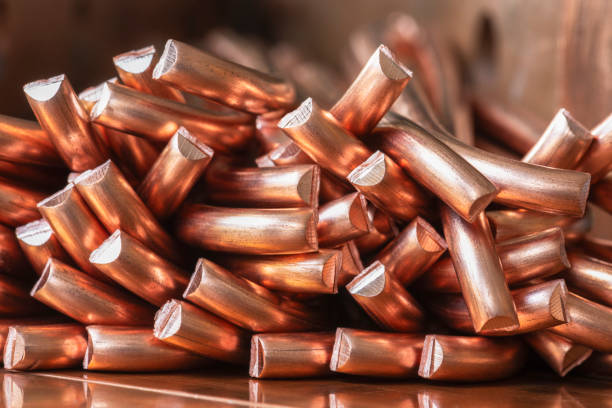
Copper is often called “Dr. Copper” because it acts like an economic indicator. When the global economy grows, copper demand rises. When economies slow, demand drops. This is why experts closely watch copper exports by country and price movements. Copper plays a key role in construction, electronics, and modern technology. It is also a core part of the global copper market and global trade systems. According to the International Copper Study Group, global copper use has crossed 26 million metric tons annually.
Today, copper demand trends are rising fast due to clean energy and electric vehicles. Solar panels, wind turbines, and EVs all need large amounts of copper. This makes copper an important metal for the future. In this blog, you will learn about copper exports by country, key exporters, and industrial demand insights. You will also understand why copper is important in the economy and how it supports global growth.
Copper is a soft metal with high electrical conductivity and strong durability. It resists corrosion and lasts for many years. These copper properties make it perfect for wiring and infrastructure. Copper is widely used in electrical wiring, renewable energy systems, electric vehicles, and construction. According to the U.S. Geological Survey, about 60% of copper is used in the electrical and construction sectors. This shows the importance of copper in modern life.
Why is copper important? Copper supports daily life and industries. It is used in homes, power grids, transport, and electronics. Many industries, such as construction, automotive, and electronics, depend on copper applications. Without copper, modern infrastructure would not function properly. Its role in industrialization and modernization makes it one of the most valuable industrial metals today.
The global copper exports market is large and growing. The total copper trade value exceeds $150 billion annually. Over the last 5–10 years, the copper export market has expanded due to urbanization and industrial growth. Countries in South America, like Chile and Peru, dominate exports. Africa, especially the DRC, is also rising. Asia-Pacific plays a strong role in consumption and refining.
Due to clean energy and new technology, the demand for copper is increasing. Wind, solar, and EV industries are pushing the demand higher. Meanwhile, due to mining challenges, the supply is limited. This creates a strong supply and demand gap. These international copper supply and demand trends are changing how commodity markets and trade volume actually work worldwide.
Here are the following top copper exporting countries:
Chile is the world’s largest copper exporter, producing over 5 million metric tons annually, nearly a quarter of global supply. Its mining sector is highly developed, supported by modern infrastructure, skilled labor, and favorable government policies. The country hosts some of the largest copper mines in the world, including Escondida Mine, which alone contributes a significant share of global output. Chile primarily exports copper to major industrial economies such as China, the United States, and countries across Europe. Its vast copper reserves, political stability, and consistent investment in mining technology ensure it remains the dominant force in the global copper market.
Peru is the second-largest copper exporter globally, with production reaching around 2.6 million metric tons in recent years. Due to increased foreign investment and the expansion of large-scale mining projects such as Cerro Verde Mine, the country has experienced significant growth. Copper is a key pillar of Peru’s economy, contributing significantly to export revenues. However, the sector faces challenges, including political instability, regulatory uncertainty, and environmental protests from local communities. Despite these issues, Peru continues to strengthen its position in the global market, with long-term demand supporting ongoing development.
The Democratic Republic of the Congo has emerged as one of the fastest-growing copper producers, with output exceeding 2 million metric tons annually. The country’s rich mineral resources, particularly in the Katanga region, make it a key player in Africa’s mining sector. DRC copper is especially important for the global energy transition, as it is widely used in electric vehicles, renewable energy systems, and battery technologies. Projects such as Tenke Fungurume Mine highlight the country’s growing industrial capacity. However, infrastructure limitations, governance issues, and supply chain risks remain ongoing concerns.
China plays a unique dual role in the global copper market. While it is the world’s largest importer of raw copper and concentrates, it is also a major exporter of refined copper and finished copper products. The country dominates global copper refining capacity, processing large volumes of imported ore into usable materials. Its massive manufacturing sector, covering construction, electronics, and renewable energy, drives enormous domestic demand. As a result, China’s copper trade flows significantly influence global prices and supply chains, making it one of the most important players in the industry.
The United States produces around 1.2 million metric tons of copper annually, with major mining operations located in states like Arizona and Utah. Key sites such as Morenci Mine contribute significantly to national output. Although the U.S. exports some copper, most of its production is consumed domestically due to strong demand from construction, infrastructure, and manufacturing sectors. The country prioritizes supply security and industrial use over large-scale exports, which limits its role as a top exporter despite substantial production capacity.
Australia and Zambia are becoming more significant in the global copper market. Australia has advanced mining technology, strong regulations, and large reserves. Sites like Olympic Dam produce copper along with other minerals. Zambia has a long tradition of copper mining and depends on it for much of its economic growth. The Copperbelt region is still the heart of its production. Although both countries produce less copper than leading exporters such as Chile and Peru, their increasing output and investment help diversify the global supply and lessen reliance on just a few major producers.
China is the world’s biggest copper importer, using more than half of the global supply. Its large manufacturing sector, which includes electronics, construction, and heavy industry, creates strong demand. Because local production cannot keep up, China brings in a lot of raw and refined copper to support its growing infrastructure, cities, and export industries.
The United States is also a major copper importer. Many industries, including construction, automotive, power generation, and telecommunications, use copper. Even though the U.S. produces some copper, it still needs to import more to support its advanced industries and infrastructure projects.
Germany is one of Europe’s key copper importers due to its strong manufacturing and engineering sector. The country uses copper extensively in automotive production, machinery, and electrical equipment. As a major industrial hub in Europe, Germany imports copper to sustain its high-value manufacturing industries.
Japan and South Korea are also significant copper importers. Both countries are global leaders in technology, electronics, and automotive production. Copper is essential for producing semiconductors, circuit boards, and high-tech devices. Their limited natural resources make them heavily dependent on imports to maintain industrial output and technological innovation.
These countries show that advanced manufacturing economies and industrial centers are the main drivers of global copper demand.
In the construction sector, copper plays a key role. It is popularly used in plumbing systems, electrical wiring, heating equipment, and roofing because of its excellent conductivity and durability. The demand for copper wiring in commercial and residential areas continues to rise as urbanization increases, especially in developing regions. Large infrastructure projects also rely heavily on copper components. Overall, the construction industry accounts for around 40% of global copper consumption, making it the largest demand driver.
As countries are shifting towards cleaner power sources, copper demand in renewable energy is growing rapidly. Wind turbines, solar panels, and energy storage systems require significant amounts of copper for efficient electricity generation and transmission. For example, a single wind turbine can use up to 4 tons of copper in its generators, cables, and transformers. Similarly, solar power systems depend on copper for wiring and inverters. In the global energy transition, this increasing reliance highlights copper’s important role.
In the production of electric vehicles (EVs), copper is quite essential. Because of their batteries, electric motors, and charging infrastructure, EVs require 3-4 times more copper than traditional internal combustion engine vehicles. Each EV uses about 80kg of copper on average. Furthermore, charging stations and grid upgrades further boost copper demand. This sector is becoming one of the fastest-growing sources of copper consumption, as EV adoption continues to grow around the world.
In the electronics industry, copper is a fundamental material. Because of its excellent electrical conductivity and reliability, it is widely used in printed circuit boards (PCBs), microchips, semiconductors, and connectors. The demand for copper in electronics is increasing rapidly because of the rapid expansion of online technologies. These rising trends become essential for modern innovation.
Commodity prices: Copper prices change due to demand and supply. High prices increase exports.
Trade policies and tariffs: Government rules affect copper trade policies and global flow.
Environmental regulations: Strict mining rules can limit production and exports.
Mining disruptions: Labor strikes and technical issues reduce supply.
Geopolitical risks: Political instability affects export routes and supply chains.
These factors affecting copper prices explain why copper prices fluctuate globally.
Copper demand is expected to grow in the coming years. As clean energy and electrification expand, the need for copper will rise. The IEA predicts that copper demand could double by 2035, pointing to a positive market outlook. Trends like recycling and sustainability are also shaping the industry, with companies putting money into greener mining and recycling methods. Because copper resources are limited, supply shortages could occur. This situation opens up new investment opportunities and supports long-term growth.
Resource depletion: Resource depletion is a concern because copper reserves are running low and are becoming more difficult to extract.
Environmental impact: Mining for copper leads to pollution, and strict environmental regulations can slow down new projects.
Labor strikes: Labor strikes and other workforce issues can disrupt copper production.
Political instability: Political instability in certain regions creates serious risks for copper mining and supply.
Logistics disruption: Delays in transportation and supply chains can affect copper exports.
These copper supply chain issues explain why copper supply is limited globally.
Copper plays an important role in the world economy. It is essential for industries, technology, and clean energy. In this blog, we covered which countries export copper, the main players, and current demand trends. Demand for copper is growing because of electric vehicles and renewable energy, but there are still supply challenges. Knowing these trends can help investors and businesses make better choices. Keep following copper market updates to take advantage of new opportunities.
Will copper demand increase in the future?
Yes, copper demand is expected to grow as electric vehicles, renewable energy, and new infrastructure projects become more common.
Which country imports the most copper?
China currently imports more copper than any other country.
Is copper a good investment in 2026?
Yes, because demand is strong and supply is limited, copper could be a good investment in 2026.
Soybeans are one of the most traded agricultural products in the world. They go into animal feed, cooking o
READ FULLCopper is often called “Dr. Copper” because it acts like an economic indicator. When the global
READ FULLSolar panels have become one of the most important parts of clean energy today. Many countries are now producing an
READ FULL